Election
Russia 2026 State Duma Election
September 20, 2026
Russia elected its ninth State Duma in three days of voting, 18–20 September 2026 — the first parliamentary election since the full-scale invasion of Ukraine and the first held in the occupied Ukrainian regions of Donetsk, Luhansk, Zaporizhzhia and Kherson. In the Central Election Commission's preliminary count after 96.95 per cent of protocols, United Russia had 57.83 per cent of the party-list vote and led in 208 of 225 single-member districts; the Communist Party, LDPR, New People and A Just Russia also passed the 5 per cent threshold, A Just Russia only late in the count. A Commission member put turnout at 59.68 per cent after 99.89 per cent of protocols, and the Commission is due to approve the final result on 25 September 2026. Russia did not invite OSCE observers, the independent monitor Golos had been dissolved after its co-chair was jailed, and the Supreme Court removed Yabloko, the only registered party campaigning against the war, from the party-list ballot. The Commission itself acknowledged ballot stuffing in Crimea and Mari El; independent statistical analyses put United Russia's share without anomalous votes at 34–35 per cent, a model estimate that is not proof of fraud. The EU and Ukraine said they would never recognise the voting held in occupied Ukrainian territory, and five other governments called it a sham.
Official results
Preliminary. Percentages are the Commission's count of the federal party-list vote after 96.95 per cent of precinct protocols, as reported by Interfax on 21 September 2026. A Just Russia stood at 4.96 per cent after 95.18 per cent of protocols and reached 5.00 per cent at this count; RIA Novosti later reported it at 5.13 per cent after 97.64 per cent. At her briefing that morning, with 95.18 per cent counted and A Just Russia still below the threshold, the Commission's chair projected 355 seats for United Russia, 40 for the Communist Party, 25 for LDPR, 20 for New People and four for A Just Russia; that projection was made before A Just Russia passed the threshold, which entitles it to a share of the 225 party-list seats, so it is not a final seat allocation. In the 225 single-member districts, United Russia candidates led in 208, the Communist Party in five, A Just Russia and independent candidates in four each, LDPR in two and Rodina in one. The other five parties on the party-list ballot — the Party of Pensioners, The Greens, Communists of Russia, Rodina and the Party of Direct Democracy — did not pass the threshold, and Yabloko's list had been struck off by the Supreme Court. Turnout is the figure Commission member Pavel Andreyev gave on 22 September after 99.89 per cent of protocols, 67,279,994 voters; the chair had announced 59.32 per cent after 95.18 per cent. The totals include remote electronic votes, among which the Commission reported United Russia at 49.14 per cent and New People second at 15.41 per cent, and votes cast in occupied Ukrainian territory, which the EU and Ukraine do not recognise. The chair said the final result would be approved on 25 September; The Moscow Times reported that the Commission gave 5 October as the latest date.
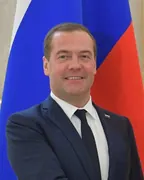
Party chairman Dmitry Medvedev did not head the list, which was led by Foreign Minister Sergey Lavrov. Its candidates led in 208 of 225 single-member districts.
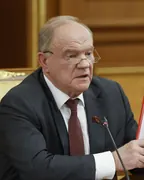
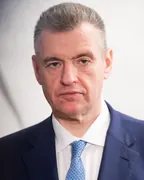
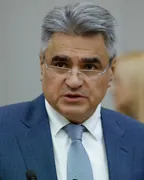
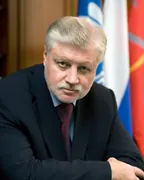
Reached the 5 per cent threshold between 95.18 and 96.95 per cent of protocols counted; its candidates led in four single-member districts.
The Integrity Ledger
What the evidence establishes, and what it does not — side by side, each finding sourced and tiered.
What is established
- Process violationsConfirmed
Russia did not invite OSCE observers, making this the third consecutive nationwide vote the OSCE was unable to observe.
More detail
ODIHR and the OSCE Parliamentary Assembly announced on 6 August 2026 that Russia had not invited OSCE observers, which they said was not in line with the commitment in the 1990 Copenhagen Document, and that ODIHR's pre-election dialogue, including a proposed needs assessment mission, had received no substantive response. After the 2021 Duma election, where restrictive conditions prevented a mission, and the 2024 presidential election, to which no invitation was issued, it was the third nationwide vote in a row without OSCE observation. ODIHR also listed legal changes since 2021 that bar people designated 'foreign agents' from standing, further limit campaign financing and restrict the appointment of polling-station representatives. Foreign Ministry spokeswoman Maria Zakharova said Russia had met its Copenhagen obligations by inviting other international organisations and individual OSCE states, and described ODIHR as known for double standards. The EU said the decision denied Russian voters and institutions an impartial and independent assessment.
- Process violationsConfirmed
Independent citizen observation had been dismantled before the campaign: Golos, the main nonpartisan monitor, dissolved in July 2025 after a court sentenced its co-chair to five years in prison.
More detail
A Moscow court sentenced Golos co-chair Grigory Melkonyants in May 2025 to five years in prison for running activities for an 'undesirable' organisation, a charge based on alleged links to the European Network of Election Monitoring Organizations that Golos denied. Golos announced on 8 July 2025 that it was shutting down, saying that continuing would expose its members, and citizens who sought its advice, to prosecution. ODIHR describes independent citizen observation in Russia as severely curtailed by sustained pressure that ended in the movement's dissolution, and says legislative amendments have further reduced opportunities to scrutinise election-day procedures.
- Process violationsConfirmed
The Supreme Court removed Yabloko, the only registered party campaigning against the war, from the party-list ballot on 10 August 2026, and its deputy chairman was sentenced to 11 years and one month in prison a week later.
More detail
The Supreme Court granted a suit by the small party Rodina to cancel the registration of Yabloko's federal list, which the Central Election Commission had registered. Rodina's representatives alleged breaches of copyright in campaign materials, of anti-extremism law and of campaign-finance rules; a Commission representative told the court that the financial-monitoring agency Rosfinmonitoring had reported foreign funding of some listed candidates, and Yabloko's lawyer said the donations came from Russian citizens who had themselves received money from abroad. The court's appeals panel upheld the ruling on 17 August, bringing it into force. The same day the Pskov City Court sentenced Yabloko deputy chairman Lev Shlosberg under articles on repeated 'discreditation' of the armed forces and spreading 'deliberately false information' about them, over an online debate and a shared Daily Mirror front page. The ruling did not cover Yabloko's single-member candidates, none of whom won a seat. The EU said the exclusion debarred the only party with an anti-war platform. The Russian Election Monitor records that party lists nominated fell by 27 per cent and single-member candidates by 25 per cent compared with 2021, and that challengers to United Russia were removed during the campaign through 'extremism' fines and criminal cases.
- Process violationsConfirmed
Voting was organised in the occupied Ukrainian territories of Crimea, Sevastopol and parts of the Donetsk, Luhansk, Zaporizhzhia and Kherson regions; the EU and Ukraine said they would never recognise it, and five other governments called it a sham that cannot change the territories' status.
More detail
It was the first State Duma election held in the four regions occupied since 2022; the Russian Election Monitor counts at least 11 single-member seats in occupied territory — three each in Donetsk and Crimea, two in Luhansk and one each in Kherson, Zaporizhzhia and Sevastopol. According to the Monitor, early voting there — in some districts of the 'Donetsk People's Republic' from the end of August — was conducted door to door by mobile teams accompanied by armed Russian servicemen, without current verified voter lists; it cites Commission data that more than 4.4 million of about 4.7 million early votes nationwide came from front-line and occupied regions under martial law, against about 225,000 early votes in 2021. Russian officials reported turnout of more than 81 per cent in the 'Donetsk People's Republic' and 74.61 to 79.39 per cent in the other three regions. Ukraine's foreign ministry called the voting a farce with null and void results; the EU said it will sanction those who organised it or stood as candidates there; Australia, Canada, New Zealand, Norway and the United Kingdom called it a gross violation of Ukraine's sovereignty and the UN Charter; ODIHR said the results would have no validity under international law, PACE's Platform for Dialogue with Russian Democratic Forces that the voting could have no legitimacy or legal effect, and the Council of Europe Secretary General that it would be incompatible with fundamental principles of international law. Voting was also held in Moldova's Transnistria region, where RIA Novosti reported more than 31,000 voters, after Moldova protested that only one polling station, in Chișinău, had been agreed with it.
- Result falsificationConfirmed
The Central Election Commission itself acknowledged ballot stuffing at polling stations in Crimea and Mari El, and declared 36,850 ballots invalid at 20 polling stations.
More detail
At her briefing on 21 September the Commission's chair, Ella Pamfilova, said two cases of ballot stuffing had occurred, in Crimea and Mari El, and that those responsible would be punished; that 36,850 ballots had been declared invalid at 20 of more than 90,000 polling stations; that 17 precinct commission members had been removed by court decisions, mainly for deliberately damaging ballots; and that no polling-station result had been rejected. The Russian Election Monitor describes the Mari El case as a commission member putting two bundles of ballots into the box in front of cameras broadcasting live from the polling station. These are the incidents the Commission accepts; its chair put reports of violations at under a hundredth of a per cent of its 91,000 commissions, while independent monitors allege much wider fraud, recorded below as not established.
- Process violationsCorroborated
Public-sector employees are assessed to have been pressed to vote, and to report that they had voted, on a large scale, much of it through remote electronic voting.
More detail
Meduza reported, citing sources, that the Presidential Administration's political bloc told state corporations and budget-funded institutions to step up 'corporate mobilisation', with mid-level staff assigned to track the turnout of small groups of colleagues; that at a Moscow state institution the names of employees said not to have voted were posted in a work chat; that teachers in Yakutsk had to report their own and their pupils' parents' turnout every two hours; and that the Communist Party's Altai committee said state employees were compelled to vote under threat of dismissal and sent names to mark. The Russian Election Monitor reports dozens of documented cases in state, educational and cultural institutions and companies — 74 counted by the Na Ravnykh project alone and about 217 reports of coercion and administrative abuse on a violations map — including at Sechenov University, the Ural Federal University, Lukoil, Rosseti and the Hermitage Museum, and reports experts' view that the 'virtual queues' on both e-voting systems on the first morning reflected public-sector employees told to vote and report back by midday. Moscow's election commission attributed those queues to attacks on the system rather than to coercion.
- Process violationsCorroborated
More than 1,300 party observers are reported to have been refused entry to polling stations on the first day of voting.
More detail
A count by the regional outlet 7x7, reported by Radio Svoboda, found that about 350 Yabloko and 984 Communist Party observers were refused entry on 18 September, including 481 Communist observers in Voronezh region over a missing date beside a candidate's signature and more than 200 in Tyumen region whose lists could not be loaded into the GAS Vybory system; several Yabloko observers and commission members, notably in St Petersburg, received summonses to military enlistment offices for that morning. The Russian Election Monitor gives a figure of nearly 1,527 Communist and Yabloko observers refused on the first day and records removals by police and court order on all three days. The Commission's chair said more than 336,000 observers worked at polling stations, 88.3 per cent of those registered, and that 15 had been removed by court order in eight regions for obstructing commission members and similar conduct.
- Statistical anomaliesCorroborated
Independent statistical analyses of the precinct-level data estimate that without statistically anomalous votes United Russia's party-list share would have been about 34 to 35 per cent rather than 57.8 per cent — a pattern that is not proof of fraud.
More detail
Novaya Gazeta Europe, Important Stories and RFE/RL each applied the method developed by physicist Sergey Shpilkin, which treats a joint rise in turnout and one party's share across polling stations as the signature of added ballots. Novaya Gazeta Europe put United Russia's share at about 34 per cent; Important Stories at no more than 35 per cent, with about 18.4 million of the 30 million paper-ballot votes recorded for the party by 21 September possibly artificial; RFE/RL at about 35 per cent, with some 18 million anomalous votes. The Russian Election Monitor estimates the party's real support at 35 to 42 per cent and actual turnout below 50 per cent, and analysts cited by Important Stories and Meduza put turnout at about 40 per cent against the declared 59.3 per cent. The analyses rest on the Commission's own published data and are model-based; their limits are set out in the statistical notes.
What is not established
- Result falsificationAlleged
Whether falsification altered the declared national result cannot be established: the evidence of wider fraud consists of monitors' reports, videos and statistical inference that no independent observer could test against the ballots or protocols.
More detail
The Russian Election Monitor reports 48 ballots pre-filled for United Russia found at a polling station in Komi after one was handed to a voter, a voter caught on hidden camera putting a dozen ballots into a box in Voronezh, a carousel-voting scheme in Moscow, and mobile boxes used for home voting at precinct 967 in Kudrovo, Leningrad region, found filled with neatly stacked ballots. Important Stories quotes observers describing ballots marked for other candidates being announced or stacked as United Russia votes during counts, including in Moscow, and analyst Boris Ovchinnikov's view that virtually all protocols with turnout above 75–85 per cent, but below 100, were filled in without reference to a count. The Commission's chair said reports of violations came from under a hundredth of a per cent of 91,000 commissions, fewer than in 2021, and the Commission rejected no polling-station result. With no international or independent citizen observation, remote electronic voting results not broken down by polling station, and results from the occupied territories published only in aggregate, neither the allegations nor the Commission's account can be checked independently.
- Result falsificationAlleged
That A Just Russia was lifted over the 5 per cent threshold by votes added to its tally is alleged by election analysts; it is not established.
More detail
In the Commission's count A Just Russia stood at 4.96 per cent after 95.18 per cent of protocols and at 5.00 per cent after 96.95 per cent. An anonymous analyst quoted by Novaya Gazeta Europe said the party's total on the Commission's website rose by 67,330 votes between 13:29 and 14:29 Moscow time on 21 September, and analyst Stanislav Andreychuk described the increase as a decision rather than a count. Analyst Boris Ovchinnikov told Meduza he believes the party would have passed the threshold in an honest count and that votes taken for United Russia had depressed its share. A strategist working with the Presidential Administration told Meduza that which parties enter the Duma is decided by Putin personally. A running total can also jump when a large batch of protocols is entered at once, and the reports do not identify the protocols behind the increase.
- Foreign interferenceAlleged
Russian officials said foreign actors tried to disrupt the vote through cyberattacks, drone strikes and 'information provocations'; their statements cite no technical evidence for the cyberattacks, and none of the sources reviewed contains an independent assessment of them.
More detail
The Commission's chair spoke of an unprecedented escalation of cyber aggression and, according to RIA Novosti, said Moscow's electronic voting system was attacked from abroad and more than 100 million potentially dangerous actions were blocked; Moscow's election commission attributed queues on the system on the first morning to attacks. State Duma Speaker Vyacheslav Volodin said the 'collective West' had tried to interfere through cyberattacks, Ukrainian drone strikes on polling stations and information provocations. RIA Novosti reported that the chair of a precinct commission in the Russian-held part of Zaporizhzhia region was killed by a drone. None of the statements names a responsible state body or describes how the attacks were attributed.
- Information operationsAlleged
A Telegram channel linked by journalists to a Kremlin-supervised organisation told voters before the election that videos of ballot stuffing could be AI-generated fakes, which Meduza describes as an effort to discredit such evidence in advance.
More detail
Meduza reported on 16 September that the channel 'War on Fakes' had published an AI-generated video of Leonardo DiCaprio with six fingers, Cristiano Ronaldo and the Alien putting ballots into a box, with a voice-over warning that videos of violations might be generated by AI and a call to trust only official sources; it had over 100,000 views. Meduza states that the channel is run by ANO Dialog, set up by the Moscow authorities in 2019, which a 2023 investigation by Meduza, Important Stories and The Bell found to be overseen in the Presidential Administration by Sergey Kiriyenko. The attribution, and the description of the video as a Kremlin decision, rest on that journalism alone.
Sources:1 - Information operationsAlleged
Foreign participants presented by state media as international observers praised the vote while it was under way; the European Platform for Democratic Elections assesses this as a manufactured substitute for credible observation.
More detail
The Commission announced more than 1,100 foreign observers, and RIA Novosti reported more than 1,000 from 133 states and 13 international organisations, quoting several of them praising the process. By 21 September EPDE had identified 36 people, among them officials of electoral bodies in Pakistan, Mali and Madagascar and members of IAPEE, an organisation reportedly founded in Moscow in 2026, whose endorsements were relayed by Russian media while voting was still under way, and found that their conclusions were not supported by a transparent observation methodology. CIS observers said they recorded no violations that could have affected the results. Whether this amounts to a coordinated legitimation effort rather than invited observation with favourable conclusions rests on EPDE's assessment alone.
Process assessment
No observation mission applying a published international methodology assessed this election: ODIHR said it would not be able to observe, and the citizen monitor Golos no longer existed. The account from within the system is the Commission's. Its chair reported more than 336,000 observers at polling stations, described the external threats as unprecedented and put reports of violations at under a hundredth of a per cent of 91,000 commissions; President Putin said the record turnout showed that Russians support efforts to strengthen the country; and CIS observers invited by the Commission reported no violations capable of affecting the results. Assessments from outside that system are negative: the EU High Representative found deepening erosion of democracy and no level playing field, PACE's Platform for Dialogue with Russian Democratic Forces called the vote a fake election that cannot produce a democratically elected parliament, and the Russian Election Monitor described a tightly controlled vote without genuine competition, with turnout managed through pressure on voters and e-voting, and ballot fraud in many regions. The format limits what anyone can check. Voting ran over three days after weeks of early voting, most of it in front-line and occupied regions; remote electronic voting, approved in 33 regions covering about 48 million voters, drew more than 3.65 million online ballots on a reported 90.88 per cent turnout among those registered for it, and its results are not broken down by polling station; Important Stories reports that the GAS Vybory 2.0 system was used for a federal election for the first time; and in Moscow paper ballots could not be issued for several hours on the final day because of a failure in the electronic voter list.
Statistical notes
People
Explore
Sources37
Embed this card
Paste this into your page. The card stays live: if this record is later revised or re-rated, every embed updates with it — so you are never left publishing a verdict we have since changed.
<iframe src="https://voterights.org/embed/election/ru/2026-duma" width="100%" height="280" style="border:0" loading="lazy" title="VoteRights"></iframe>Free to embed under CC BY 4.0. The card is English-only for now, loads no tracking of any kind, and runs no script on your page.
Published September 24, 2026
Share links open the network’s own composer. Nothing is embedded here, so no third party learns which pages you read.